Most commented posts
- PRONUNCIATION – the ED sound — 4 comments
- GRAMMAR – The Passive Voice — 3 comments
- Adjectives + Prepositions (OF) — 2 comments
- Mastering the Modal: Understanding the Versatility of “Would” — 2 comments
- TOO vs. ENOUGH — 1 comment


May 15
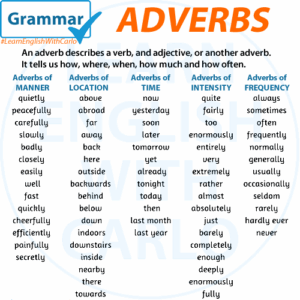
ADVERBSAn adverb describes a verb, an adjective or another adverb. Look at this table to see all the things an adverb can tell us. Adverbs are essential parts of speech that modify verbs, adjectives, or other adverbs, giving us more information about how, where, when, how much, or how often something happens. Let’s explore the …
May 15
The Verb “To Do” The verb to do is another common verb in English. It can be used as an auxiliary and a main verb. It is often used in questions. Affirmative Negative Interrogative Short answers Short answers I do I don’t .. Do I .. ? Yes, I do. No, I don’t. You do …
May 15
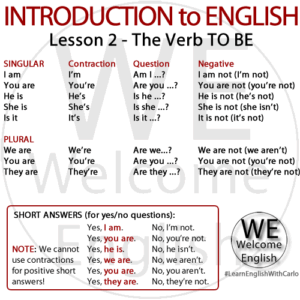
The Verb “to be” Affirmative Contracted Question Negative I Negative II Short answers I am .. I’m .. Am I …? I’m not …. I’m not… Yes, I am. No, I’m not. You are .. You’re.. Are you..? You’re not .. You aren’t .. Yes, you are. No, you aren’t. He is …
May 06
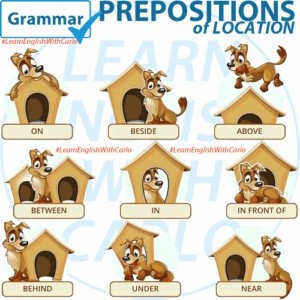
Prepositions of location tell us where one thing is in relation to another thing. REMEMBER: The book is ON the table. In this sentence, the preposition ON tells us the relationship between the book and the table. If we change the preposition, we change the relationship. Let’s review some common prepositions of location:
Mar 14

Rob and steal both mean ‘take something from someone without permission’. Rob focuses on the place or person from which the thing is taken. Steal focuses on the thing that is taken. Look at the examples below: ROB – you rob a person or place (of something)rob – robbed – robbedTo rob means to take …
Feb 05
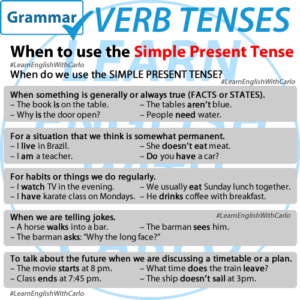
When do we use the SIMPLE PRESENT TENSE? When something is generally or always true (FACTS or STATES). The book is on the table.The tables aren’t blue.Why is the door open?People need water. For a situation that we think is somewhat permanent.I live in Brazil.She doesn’t eat meat.I am a teacher.Do you have a car? …
Jan 17
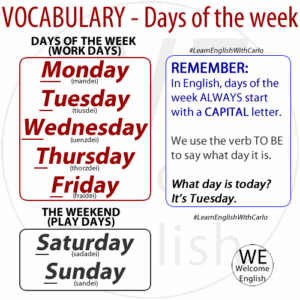
Days of the week (phonetic spelling). REMEMBER: Days of the week always start with a capital letter. We use the verb TO BE to say what day it is. We use the preposition ON to say which day something happens. Other important vocabulary:
Jan 12
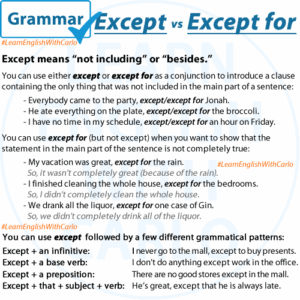
EXCEPT means “not including” or “besides.” You can use either EXCEPT or EXCEPT FOR as a conjunction to introduce a clause containing the only thing that was not included in the main part of a sentence:Everybody came to the party, EXCEPT/EXCEPT FOR Jonah.He ate everything on the plate, EXCEPT/EXCEPT FOR the broccoli.I have no time …
Dec 29
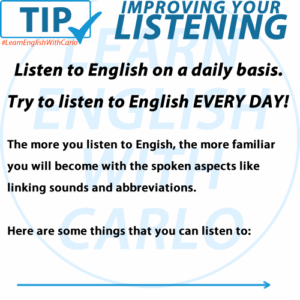
Here are some ideas that you can use every day that might help you to improve your English. Watch movies, series, and news in English (with subtitles if necessary). Listen to music in English and try to understand the lyrics. Watch TED Talks or other speeches in English. Record yourself and listen to the recording. …
Dec 29

People always ask me what things they can do during their everyday lives that might help them improve their English. Here are a few suggestions. If you can think of any others, please add them in the comments.