Most commented posts
- PRONUNCIATION – the ED sound — 4 comments
- GRAMMAR – The Passive Voice — 3 comments
- Adjectives + Prepositions (OF) — 2 comments
- Mastering the Modal: Understanding the Versatility of “Would” — 2 comments
- TOO vs. ENOUGH — 1 comment


Nov 26

“Remember” is about your own memory, recalling information independently, while “remind” involves assisting or being prompted to recall something. If you remember something, it’s a natural act of memory. If something reminds you, it’s usually a trigger that brings a memory to your mind. REMEMBER: “Remember” is a verb that describes the ability to recall …
Nov 24

When learning English, one of the most challenging aspects for students is understanding the difference between the Present Perfect and the Simple Past. Both tenses refer to actions in the past, but they are used in very different ways depending on the context. Let’s break down these differences. Present Perfect: Unfinished Actions The Present Perfect …
Nov 23
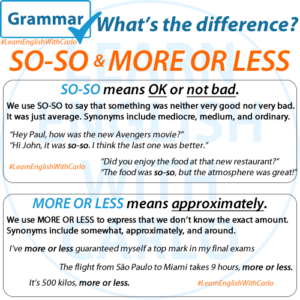
While SO-SO and MORE OR LESS are short and simple phrases, they serve entirely different purposes in English. Let’s dive into their meanings, uses, and nuances. 1. SO-SO: The Language of the Average Definition:SO-SO is used to describe something that is average, ordinary, or not impressive. It conveys a neutral feeling—not good, not bad. When …
Nov 20
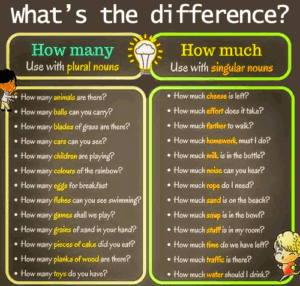
When we want to know the quantity or amount of something, we use HOW MUCH or HOW MANY. Key Differences: Remembering this distinction will help you use “how much” and “how many” correctly in questions and statements based on whether the noun is countable or uncountable. If you have any questions or doubts, please ask …
Nov 19

English learners often get confused between “its” and “it’s” — and even native speakers make mistakes with these two! But don’t worry. Once you understand the difference, it’s easy to get it right every time. 🔤 Quick Explanation 🔎 When to Use “It’s” It’s is a contraction (short form) of: 📌 Examples with “it is”: …
Nov 18
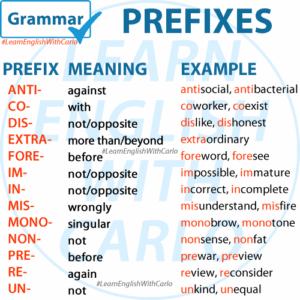
Have you ever wondered how a single word can convey vastly different meanings, just by adding a few letters at the beginning? Enter the fascinating world of prefixes – those tiny yet mighty linguistic tools that shape our language in profound ways. What are Prefixes? At their core, prefixes are linguistic building blocks, morphemes attached …
Nov 17
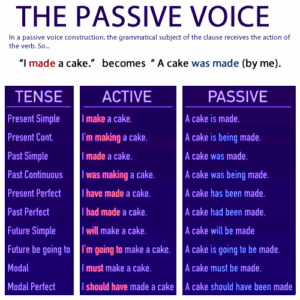
There are two voices in English (and most other languages), ACTIVE and PASSIVE. ACTIVE: Isabella ate the burrito.In this sentence, the subject, Isabella, performed the action, and the object, the burrito, suffered the action. To express something in the PASSIVE voice, the idea needs to have an OBJECT.Why? Because in the passive voice, the OBJECT …
Nov 16
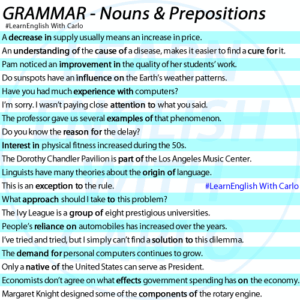
Certain nouns are often accompanied by specific prepositions, creating noun-preposition collocations. For instance, when we use the noun “interest,” it is typically followed by the preposition “in.” Similarly, “contact” pairs with “with,” and “room” with “for.” For example: Recognizing which preposition to use in these collocations can be challenging. One helpful strategy is to consider …
Nov 15
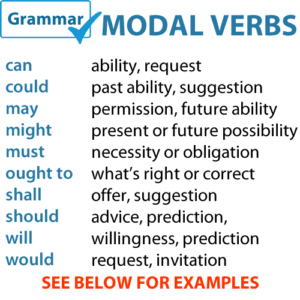
What Are Modal Verbs? Modal verbs are auxiliary (helping) verbs that express possibility, necessity, ability, permission, and other attitudes toward the action of the main verb. Unlike regular verbs, modal verbs do not change form based on the subject (e.g., “I can,” “he can”). They are always followed by the base form of the main …
Nov 14

Many people confuse these two expressions. And while they are similar, there is a very important difference. ON time – This referrs to when you have an appointment or scheduled time to be somewhere or do something. The meeting starts at 2 pm. I have to be on time. (If I’m late something bad will …