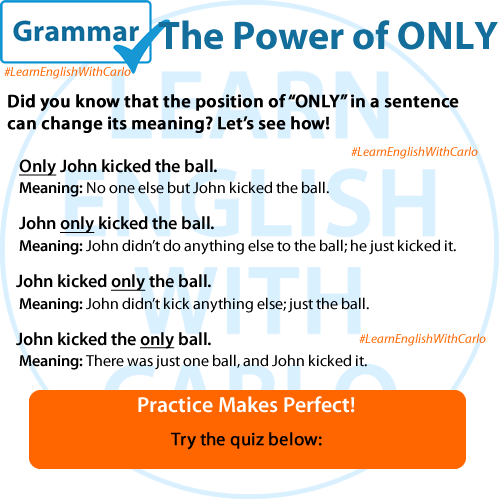
Using “only” correctly can make a big difference in the meaning of a sentence. It’s a small word with a powerful impact! Let’s dive into how to place “only” correctly to convey the exact meaning you want.
Understanding the Role of “Only”:
“Only” is a versatile word that can modify different parts of a sentence. Depending on its position, “only” can change the focus and meaning. Here’s a simple guide to help you understand and use “only” effectively.
Examples and Explanations:
- She drinks coffee only in the morning.
- Meaning: She drinks coffee at no other time but in the morning.
- Explanation: “Only” modifies the time when she drinks coffee.
- He speaks only Spanish.
- Meaning: He doesn’t speak any other language besides Spanish.
- Explanation: “Only” modifies the language he speaks.
- They went only to Paris last summer.
- Meaning: They didn’t visit any other place last summer.
- Explanation: “Only” modifies the destination of their trip.
- The teacher gave homework only to the students.
- Meaning: The teacher didn’t give homework to anyone else.
- Explanation: “Only” modifies the recipients of the homework.
- I eat only vegetables for dinner.
- Meaning: I don’t eat anything else besides vegetables for dinner.
- Explanation: “Only” modifies the food being eaten.
Conclusion:
Remember, the placement of “only” can change the meaning of a sentence significantly. By practicing and paying attention to its position, you can ensure your sentences convey the exact meaning you intend.