
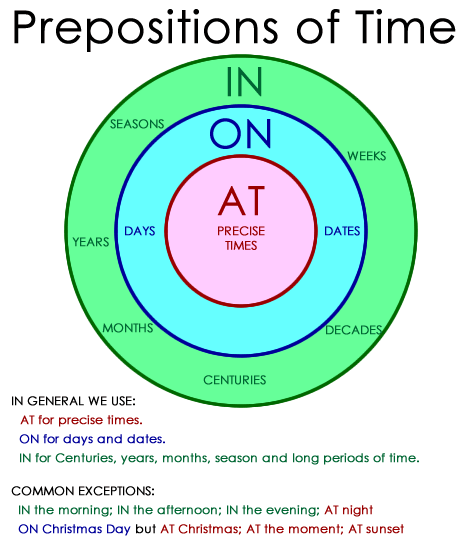
Understanding prepositions of time can be tricky, but they’re essential for clear and accurate communication. Let’s break down the use of “in,” “on,” and “at” with examples to make them easier to grasp.
1. IN
Use “in” for longer periods of time, such as months, years, centuries, and long periods:
- Months:in January, in May
- Example: I was born in January.
- Years:in 1995, in 2020
- Example: We moved to this city in 2020.
- Centuries:in the 21st century
- Example: Many technological advancements occurred in the 21st century.
- Periods of the day:in the morning, in the afternoon, in the evening
- Example: She likes to jog in the morning.
2. ON
Use “on” for specific days and dates:
- Days of the week:on Monday, on Friday
- Example: Let’s meet on Monday.
- Dates:on July 4th, on December 25th
- Example: The event is on July 4th.
- Specific day + part of day:on Monday morning, on Friday night
- Example: We have a meeting on Tuesday afternoon.
3. AT
Use “at” for precise times and specific points in the day:
- Clock times:at 5:00 PM, at midnight
- Example: The movie starts at 7:30 PM.
- Specific periods:at noon, at night, at dawn
- Example: He works best at night.
Summary Chart
| Preposition | Use For | Examples |
|---|---|---|
| IN | Months, years, centuries, long periods | in April, in 2021, in the evening |
| ON | Days, dates | on Tuesday, on March 3rd |
| AT | Precise times, specific points of day | at 6 PM, at midnight, at noon |