Most commented posts
- PRONUNCIATION – the ED sound — 4 comments
- GRAMMAR – The Passive Voice — 3 comments
- Adjectives + Prepositions (OF) — 2 comments
- Mastering the Modal: Understanding the Versatility of “Would” — 2 comments
- TOO vs. ENOUGH — 1 comment


May 26
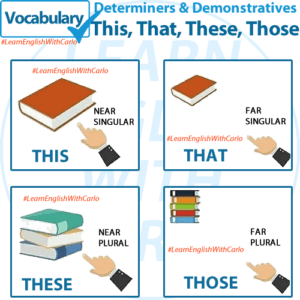
Demonstrative Pronouns Visual Aid Quick Tips This simple framework can help your students understand and correctly use these pronouns.
Permanent link to this article: https://learnenglishwithcarlo.com/grammar-this-that-these-those/
May 26
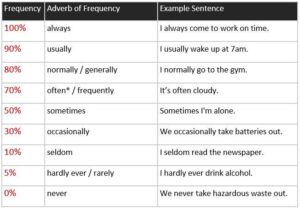
Have you ever wondered how to tell someone how often you do something? There are special words in English that help us do just that. They’re called adverbs of frequency, and they’re pretty cool! Let’s learn more about them together. What are Adverbs of Frequency? Adverbs of frequency are words that tell us how often …
Permanent link to this article: https://learnenglishwithcarlo.com/adverbs-of-frequency/
May 22

A Job Work Key Differences Examples to Illustrate If you have any questions or doubts, please ask in the comments or send me a private message. Follow me on Instagram: @englishyourwaybror look for the hashtag #LearnEnglishWithCarlo
Permanent link to this article: https://learnenglishwithcarlo.com/a-job-vs-work/
May 22

Today, let’s learn the difference between “wait” and “await”. Both words are about staying in a place until something happens, but they are used differently. Here’s a simple guide: Wait Await Key Points to Remember: Practice Try these sentences: Answers: I hope this helps you understand the difference between “wait” and “await”. Keep practicing, and …
Permanent link to this article: https://learnenglishwithcarlo.com/confusing-words-await-vs-wait/
May 22

The 300 Most Commonly Used English Words According to studies, the first 25 most commonly used words make up about 30% of all printed material in English. The first 100 make up about 50% of all written material, and the first 300 make up about 65% of all written material in English. Here’s a list …
Permanent link to this article: https://learnenglishwithcarlo.com/vocabulary-the-300-most-commonly-used-english-words/
May 21

The English language has some strange rules about when to use capital letters. Here are some important guidelines:
Permanent link to this article: https://learnenglishwithcarlo.com/grammar-capitlaization-rules-quando-usar-a-letra-maiuscula/
May 21
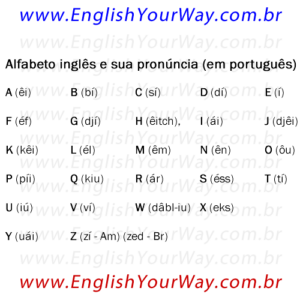
Today, we’re going to learn how to pronounce each letter phonetically. This will help you read, write, and speak English more confidently. Let’s start by going through the alphabet together. For example, the letter ‘A’ is pronounced ‘ei,’ ‘B’ is pronounced ‘bi,’ and ‘C’ is pronounced ‘si.’ Alphabet and Numbers A (ei), B (bi), C …
Permanent link to this article: https://learnenglishwithcarlo.com/the-alphabet-phonetically/
May 20
“In spite of” and “despite” are very similar in meaning and usage, and both are used to show contrast or opposition to what is expected. Basic Meaning Both “in spite of” and “despite” mean that something happens even though there is something that might prevent it. They are used to express a contrast between two …
Permanent link to this article: https://learnenglishwithcarlo.com/in-spite-of-vs-despite/
May 15
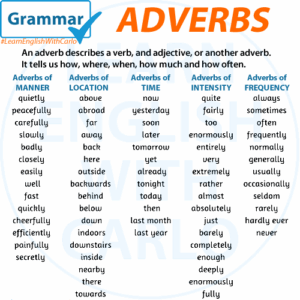
ADVERBSAn adverb describes a verb, an adjective or another adverb. Look at this table to see all the things an adverb can tell us. Adverbs are essential parts of speech that modify verbs, adjectives, or other adverbs, giving us more information about how, where, when, how much, or how often something happens. Let’s explore the …
Permanent link to this article: https://learnenglishwithcarlo.com/adverbs/
May 15
The Verb “To Do” The verb to do is another common verb in English. It can be used as an auxiliary and a main verb. It is often used in questions. Affirmative Negative Interrogative Short answers Short answers I do I don’t .. Do I .. ? Yes, I do. No, I don’t. You do …
Permanent link to this article: https://learnenglishwithcarlo.com/verbs-to-do/