Category: INSTAGRAM
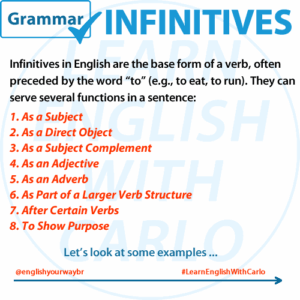
Infinitives in English are the base form of a verb, often preceded by the word “to” (e.g., to eat, to run). They can serve several functions in a sentence: 1. As a Subject: 2. As a Direct Object: 3. As a Subject Complement: 4. As an Adjective: 5. As an Adverb: 6. As Part of …
Continue reading
Permanent link to this article: https://learnenglishwithcarlo.com/infinitives/
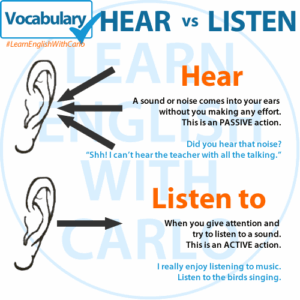
One of the most common questions English learners ask is: “What is the difference between ‘hear’ and ‘listen’?” These two verbs may seem similar, but they are used in different ways and convey distinct meanings. Let’s dive into the nuances of these two words to help you use them confidently in your conversations. Hear We …
Continue reading
Permanent link to this article: https://learnenglishwithcarlo.com/grammar-hear-listen/
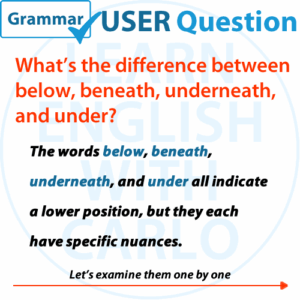
The English language often offers several words to convey similar meanings, each with subtle distinctions that can add depth to our communication. Words like below, beneath, underneath, and under all suggest a lower position, but each carries its unique nuance. In this post, we’ll explore these differences with clear definitions, examples, and usage tips. 1. …
Continue reading
Permanent link to this article: https://learnenglishwithcarlo.com/mastering-the-differences-below-beneath-underneath-and-under/
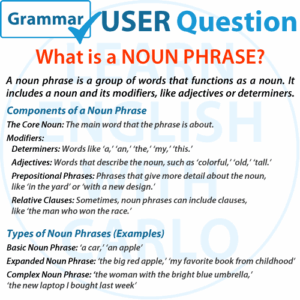
When you’re learning English, understanding the structure of sentences is essential. One important part of many sentences is a noun phrase. In this post, we’ll break down what noun phrases are, how they’re used, and give you some examples to help you recognize and create your own. What Is a Noun Phrase? A noun phrase …
Continue reading
Permanent link to this article: https://learnenglishwithcarlo.com/understanding-noun-phrases-in-english/
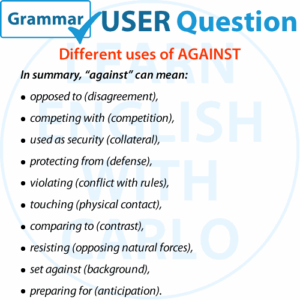
This question was sent to me by an Instagram follower as a DM asking to explain different uses of the word AGAINST. Uses of “Against” This format includes clear definitions and two relevant examples for each use of “against.”
Permanent link to this article: https://learnenglishwithcarlo.com/the-uses-of-against/
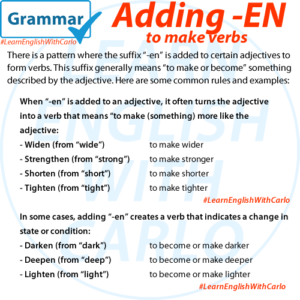
In English, some adjectives can be turned into verbs by adding the suffix -en. These verbs usually indicate the process of becoming or making something have the quality described by the adjective. Understanding how and when to use -en to form verbs can greatly expand your vocabulary and improve your communication skills. How Does It …
Continue reading
Permanent link to this article: https://learnenglishwithcarlo.com/turning-adjectives-into-verbs-with-en/
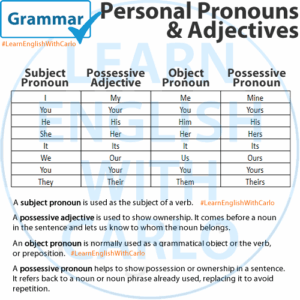
Personal pronouns and possessive adjectives are essential elements of English grammar. They help us talk about people, things, and ownership without repeating the same nouns over and over again. In this post, we’ll explore five key types: subject pronouns, object pronouns, possessive adjectives, possessive pronouns, and reflexive pronouns. Understanding how to use each one correctly …
Continue reading
Permanent link to this article: https://learnenglishwithcarlo.com/grammar-pronouns-and-adjectives/
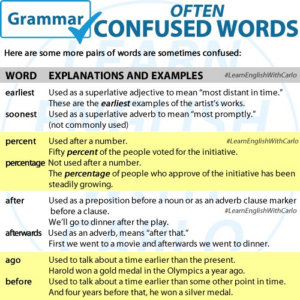
Here are expanded explanation with examples for each pair: EARLIEST vs. SOONEST PERCENT vs. PERCENTAGE AFTER vs. AFTERWARDS AGO vs. BEFORE These explanations and examples highlight the subtle differences between these similar words and expressions in English.
Permanent link to this article: https://learnenglishwithcarlo.com/grammar-more-confusing-words/
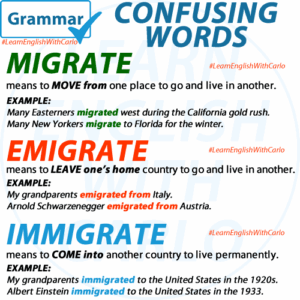
GRAMMAR – MIGRATE vs EMIGRATE vs IMMIGRATE Migrate Emigrate Immigrate Key Differences: In simpler terms: Immigrate = Entering a new country. Migrate = Moving, not necessarily to or from a specific country. Emigrate = Leaving a country.
Permanent link to this article: https://learnenglishwithcarlo.com/grammar-migrate-vs-emigrate-vs-immigrate/
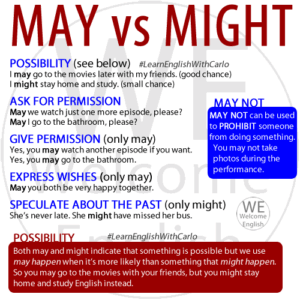
In English, both may and might are modal verbs used to indicate possibility. However, they aren’t interchangeable in all situations. Knowing when to use each one can improve the accuracy and clarity of your communication. May: A Stronger Possibility May is often used when something is more likely to happen. When we say something may …
Continue reading
Permanent link to this article: https://learnenglishwithcarlo.com/may-vs-might-difference/
Load more