
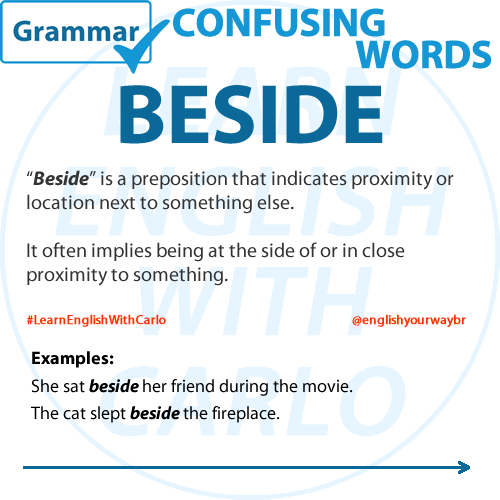
Beside:
“Beside” is a preposition that indicates proximity or location next to something else.
It often implies being at the side of or in close proximity to something.
Examples:
She sat beside her friend during the movie.
The cat slept beside the fireplace.
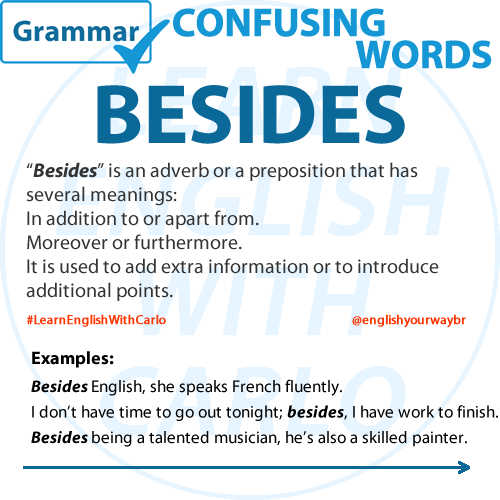
Besides:
“Besides” is an adverb or a preposition that has several meanings:
In addition to or apart from.
Moreover or furthermore.
It is used to add extra information or to introduce additional points.
Examples:
Besides English, she speaks French fluently.
I don’t have time to go out tonight; besides, I have work to finish.
Besides being a talented musician, he’s also a skilled painter.
Remember, “besides” can also function as a preposition, similar to “beside,” but its primary use is as an adverb introducing additional information or points.
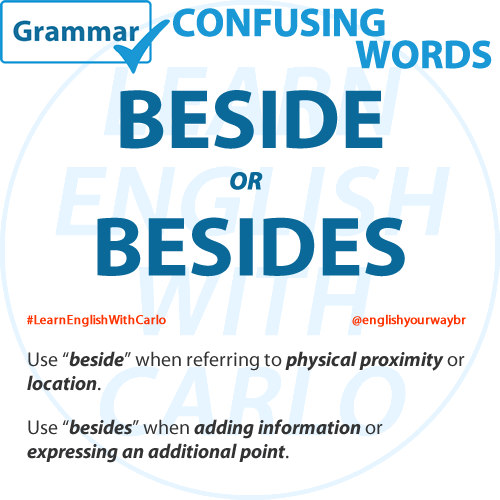
To differentiate between the two:
Use “beside” when referring to physical proximity or location.
Use “besides” when adding information or expressing an additional point.
Wrong shortcode initialized