PHRASAL VERBS with “throw”

phrasal verb is a combination of a verb and an adverb or preposition, for example ‘look up’ or ‘look after’, which together have a particular meaning which is different from the verb alone.

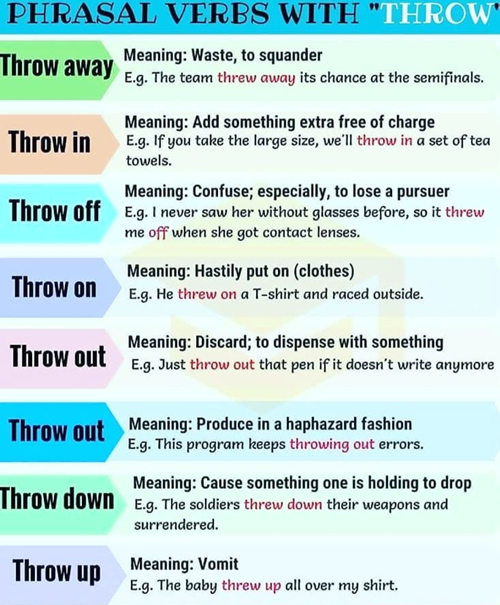
Phrasal verbs with “throw” have a range of meanings depending on the preposition or adverb they are paired with. Here are the definitions and examples for each:

  1. Throw away

    • Definition: To discard something as useless or unwanted.
    • Example: “She decided to throw away the old magazines.”
  2. Throw in

    • Definition: To add something extra or include something at no additional cost.
    • Example: “They threw in a free pair of socks with the purchase of the shoes.”
  3. Throw off

    • Definition: To mislead or confuse someone; to quickly remove something.
    • Example 1: “The decoy threw off the pursuers.”
    • Example 2: “She threw off her coat as she entered the warm room.”
  4. Throw on

    • Definition: To put on a piece of clothing quickly.
    • Example: “He threw on a jacket and ran out the door.”
  5. Throw out

    • Definition: To dispose of something; to reject or dismiss someone or something.
    • Example 1: “He decided to throw out the broken chair.”
    • Example 2: “The committee threw out the proposal.”
  6. Throw down

    • Definition: To challenge someone to a fight or competition.
    • Example: “He threw down the gauntlet and challenged his rival to a duel.”
  7. Throw up

    • Definition: To vomit; to construct something hastily.
    • Example 1: “She felt sick and had to throw up.”
    • Example 2: “They threw up a temporary shelter for the event.”
  1. Throw back

    • Definition: To return something to where it came from; to refer to something from the past.
    • Example 1: “They caught a fish but decided to throw it back into the lake.”
    • Example 2: “Her dress was a throwback to the fashion of the 1960s.”
  2. Throw together

    • Definition: To assemble or create something quickly and without much preparation.
    • Example: “He threw together a quick meal from the leftovers in the fridge.”
  3. Throw about/around

    • Definition: To scatter things carelessly; to mention or suggest ideas casually.
    • Example 1: “The kids threw their toys around the room.”
    • Example 2: “She threw around some ideas for the new project during the meeting.”
  4. Throw down (also means)

    • Definition: To put something down forcefully.
    • Example: “He threw down his backpack in frustration.”

If you have any questions or doubts, please ask in the comments or send me a private message.

Follow me on Instagram: @englishyourwaybr
or look for the hashtag #LearnEnglishWithCarlo

IDIOM OF THE DAY – “to make ends meet”

Idioms are expressions whose meanings are different from the individual words and therefore aren’t meant to be taken literally. They exist in most languages and are usually the result of usage over a long period of time.

If you have any questions or doubts, please ask in the comments or send me a private message.

Follow me on Instagram: @englishyourwaybr
or look for the hashtag #LearnEnglishWithCarlo
GRAMMAR – This, that, these, those

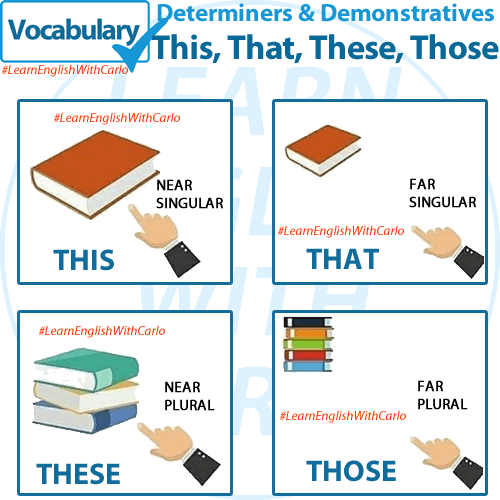
Demonstrative Pronouns

  1. This
    • Usage: Refers to a singular noun that is close to the speaker.
    • Example: This is my book. (The book is near me.)
  2. That
    • Usage: Refers to a singular noun that is far from the speaker.
    • Example: That is my book. (The book is not near me.)
  3. These
    • Usage: Refers to plural nouns that are close to the speaker.
    • Example: These are my books. (The books are near me.)
  4. Those
    • Usage: Refers to plural nouns that are far from the speaker.
    • Example: Those are my books. (The books are not near me.)

Visual Aid

Quick Tips

  • This/These = close.
  • That/Those = far.
  • This/That = singular.
  • These/Those = plural.

This simple framework can help your students understand and correctly use these pronouns.

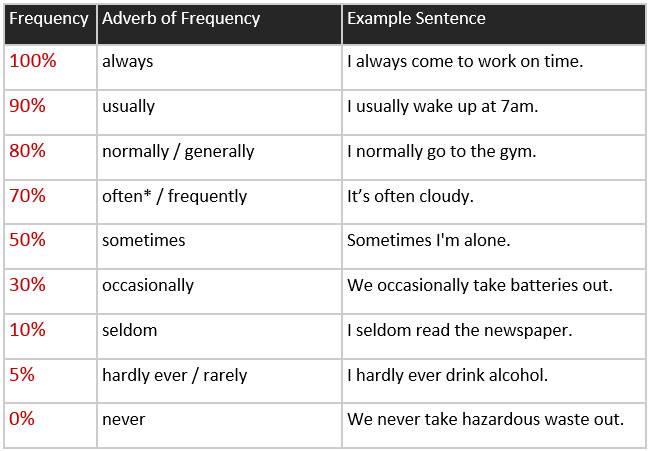
Adverbs of Frequency

Have you ever wondered how to tell someone how often you do something? There are special words in English that help us do just that. They’re called adverbs of frequency, and they’re pretty cool! Let’s learn more about them together.

What are Adverbs of Frequency? Adverbs of frequency are words that tell us how often something happens. They’re like little helpers that make our sentences clearer. Some common ones are “always,” “usually,” “often,” “sometimes,” “rarely,” and “never.” For example, if you say, “I always brush my teeth before bed,” the word “always” tells us that you do it every time.

Understanding Usage: We usually put adverbs of frequency before the main verb in a sentence. For example, “She usually goes to bed early.” But if the sentence is negative, we put the adverb before the main verb. Like in, “He never eats vegetables.” These words also work with different verb tenses, like past, present, and future.

Frequency Adverbs in Daily Life: In our everyday conversations, these words help us talk about our habits and routines. For example, “I often walk to school,” or “She sometimes plays soccer with her friends.” Everyone’s habits are different, so these words help us explain how often we do things.

Common Mistakes and Pitfalls: Sometimes, we might put these words in the wrong place in a sentence, which can make it confusing. It’s important to double-check where they go. Also, using words like “always” or “never” too much can sound a bit strange. It’s better to find a balance.

Wrong shortcode initialized

If you have any questions or doubts, please ask in the comments or send me a private message.

Follow me on Instagram: @englishyourwaybr
or look for the hashtag #LearnEnglishWithCarlo
A Job vs. Work

A Job

  • Definition: A job is a specific position of employment where you do regular tasks and get paid.
  • Part of Speech: Noun
  • Example: Being a teacher, a nurse, or a cashier.
  • Usage: You can say, “I have a job as a teacher,” or “She is looking for a job.”

Work

  • Definition: Work refers to tasks or activities that require effort. It can be any activity you do to achieve something, and it doesn’t always mean paid employment.
  • Part of Speech: Can be a noun or a verb.
    • As a noun: “Work” means tasks or activities.
    • As a verb: “To work” means to perform tasks or duties.
  • Examples:
    • Noun: Cleaning your house, doing homework, or working on a project.
    • Verb: “I work at a bank,” or “She works hard every day.”
  • Usage:
    • Noun: “I have a lot of work to do,” or “He enjoys his work.”
    • Verb: “I work from 9 to 5,” or “They are working on a new project.”

Key Differences

  1. Specific vs. General:
    • A job is specific – it is a particular role or position you hold.
    • Work is more general – it includes any activity that requires effort, whether it’s paid or unpaid.
  2. Employment vs. Activities:
    • A job usually refers to paid employment.
    • Work can refer to both paid and unpaid activities.
  3. Countable vs. Uncountable:
    • Job is countable. You can say “a job,” “two jobs,” etc.
    • Work is uncountable. You cannot say “a work” or “two works.” Instead, you say “a lot of work” or “some work.”
  4. Parts of Speech:
    • Job is only a noun.
    • Work can be a noun or a verb.

Examples to Illustrate

  • Job (Noun):
    • “I got a job at a new company.”
    • “She has two jobs to support her family.”
  • Work (Noun):
    • “I have too much work to do tonight.”
    • “He enjoys his work as a volunteer.”
  • Work (Verb):
    • “I work at a bank.”
    • “They work hard every day.”

If you have any questions or doubts, please ask in the comments or send me a private message.

Follow me on Instagram: @englishyourwaybr
or look for the hashtag #LearnEnglishWithCarlo

CONFUSING WORDS: Wait vs. Await

Today, let’s learn the difference between “wait” and “await”. Both words are about staying in a place until something happens, but they are used differently. Here’s a simple guide:

Wait

  • Common Use: “Wait” is used in everyday English.
  • Structure: You often use “wait” with the word “for” and sometimes with “to”.
  • Example Sentences:
    • I wait for the bus every morning.
    • She waited for her friend to arrive.
    • Please wait to be seated.

Await

  • Formal Use: “Await” is more formal and less common in casual conversation.
  • Structure: “Await” does not use the word “for”.
  • Example Sentences:
    • We await your response.
    • The students await their results.
    • He is awaiting trial.

Key Points to Remember:

  1. Formality:
    • Use “wait” for everyday situations.
    • Use “await” in formal writing or situations.
  2. Grammar:
    • “Wait” is often followed by “for” (wait for something/someone).
    • “Await” is not followed by “for” (await something/someone).

Practice

Try these sentences:

  1. I can’t wait ___ the weekend.
  2. The team awaits ___ the coach’s instructions.
  3. Please wait ___ your turn.
  4. We are awaiting ___ the final decision.

Answers:

  1. for
  2. (no word needed)
  3. for
  4. (no word needed)

I hope this helps you understand the difference between “wait” and “await”. Keep practicing, and you’ll get better every day!

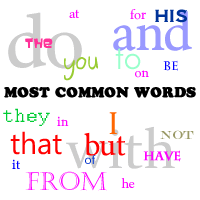
VOCABULARY: The Most Commonish Words

most-common-wordsThe 300 Most Commonly Used English Words

According to studies, the first 25 most commonly used words make up about 30% of all printed material in English. The first 100 make up about 50% of all written material, and the first 300 make up about 65% of all written material in English. Here’s a list of the 300 most commonly used words in English.

1 – 100


  1. the
  2. of
  3. and
  4. a
  5. to
  6. in
  7. is
  8. you
  9. that
  10. it
  11. he
  12. was
  13. for
  14. on
  15. are
  16. as
  17. with
  18. his
  19. they
  20. I
  1. at
  2. be
  3. this
  4. have
  5. from
  6. or
  7. one
  8. had
  9. by
  10. word
  11. but
  12. not
  13. what
  14. all
  15. were
  16. we
  17. when
  18. your
  19. can
  20. said
  1. there
  2. use
  3. an
  4. each
  5. which
  6. she
  7. do
  8. how
  9. their
  10. if
  11. will
  12. up
  13. other
  14. about
  15. out
  16. many
  17. then
  18. them
  19. these
  20. so
  1. some
  2. her
  3. would
  4. make
  5. like
  6. him
  7. into
  8. time
  9. has
  10. look
  11. two
  12. more
  13. write
  14. go
  15. see
  16. number
  17. no
  18. way
  19. could
  20. people
  1. my
  2. than
  3. first
  4. water
  5. been
  6. call
  7. who
  8. oil
  9. its
  10. now
  11. find
  12. long
  13. down
  14. day
  15. did
  16. get
  17. come
  18. made
  19. may
  20. part

101 – 200


  1. over
  2. new
  3. sound
  4. take
  5. only
  6. little
  7. work
  8. know
  9. place
  10. year
  11. live
  12. me
  13. back
  14. give
  15. most
  16. very
  17. after
  18. thing
  19. our
  20. just
  1. name
  2. good
  3. sentence
  4. man
  5. think
  6. say
  7. great
  8. where
  9. help
  10. through
  11. much
  12. before
  13. line
  14. right
  15. too
  16. mean
  17. old
  18. any
  19. same
  20. tell
  1. boy
  2. follow
  3. came
  4. want
  5. show
  6. also
  7. around
  8. form
  9. three
  10. small
  11. set
  12. put
  13. end
  14. does
  15. another
  16. well
  17. large
  18. must
  19. big
  20. even
  1. such
  2. because
  3. turn
  4. here
  5. why
  6. ask
  7. went
  8. men
  9. read
  10. need
  11. land
  12. different
  13. home
  14. us
  15. move
  16. try
  17. kind
  18. hand
  19. picture
  20. again
  1. change
  2. off
  3. play
  4. spell
  5. air
  6. away
  7. animal
  8. house
  9. point
  10. page
  11. letter
  12. mother
  13. answer
  14. found
  15. study
  16. still
  17. learn
  18. should
  19. America
  20. world

201 – 300


  1. high
  2. every
  3. near
  4. add
  5. food
  6. between
  7. own
  8. below
  9. country
  10. plant
  11. last
  12. school
  13. father
  14. keep
  15. tree
  16. never
  17. start
  18. city
  19. earth
  20. eye
  1. light
  2. thought
  3. head
  4. under
  5. story
  6. saw
  7. left
  8. don’t
  9. few
  10. while
  11. along
  12. might
  13. close
  14. something
  15. seem
  16. next
  17. hard
  18. open
  19. example
  20. begin
  1. life
  2. always
  3. those
  4. both
  5. paper
  6. together
  7. got
  8. group
  9. often
  10. run
  11. important
  12. until
  13. children
  14. side
  15. feet
  16. car
  17. mile
  18. night
  19. walk
  20. white
  1. sea
  2. began
  3. grow
  4. took
  5. river
  6. four
  7. carry
  8. state
  9. once
  10. book
  11. hear
  12. stop
  13. without
  14. second
  15. later
  16. miss
  17. idea
  18. enough
  19. eat
  20. face
  1. watch
  2. far
  3. Indian
  4. really
  5. almost
  6. let
  7. above
  8. girl
  9. sometimes
  10. mountain
  11. cut
  12. young
  13. talk
  14. soon
  15. list
  16. song
  17. being
  18. leave
  19. family
  20. it’s

GRAMMAR: Capitalization Rules

The English language has some strange rules about when to use capital letters. Here are some important guidelines:

  1. Capitalize the pronoun I.
    Example: Jennifer and I went to the movies yesterday.
  2. Capitalize the first letter of the first word of each sentence.
    Example: Learning to capitalize correctly will improve your writing.
  3. Capitalize the first letter of names of people, organizations, and places.
    Example: Juan went on a trip to Tokyo, Japan for his company, General Motors Corporation.
  4. Capitalize the first letter of adjectives that are made from the names of people and places.
    Example: I like Mexican food.
  5. Capitalize initials
    Example: My brother’s favorite author is H.G. Wells.
  6. Capitalize the first letter of directions only when they are used to designate actual places, not when they point in a direction.
    Example: When we visited the Southwest, we actually had to drive north.
  7. Capitalize the first letter of the names of months and the days of the week.
    Example: My birthday will be on a Friday next June.
  8. Capitalize the official title of a person (including abbreviations), but only when you use it with the person’s name.
    Example: Did Clarissa recommend Dr. Montoya to you?
  9. Capitalize words used as names or parts of names.
    Example: Did Uncle George call my mom to tell her our grandmother is with Dad?
  10. Capitalize the first letter of important words in a title of a book, magazine, story, essay, etc.
    Example: I enjoyed Mark’s essay, “The Truth About Being a Good Student.”
  11. Capitalize historical events and documents.
    Example: The Emancipation Proclamation was issued during the Civil War.
  12. Capitalize the name of languages, races, nationalities, and religions.
    Example: I learned in Spanish class that several Hispanics are Catholic.
  13.  Capitalize acronyms. (An acronym is a word formed by the first, or first few, letters of words in a long name of an organization.)
    Example: CARE is the Cooperative for American Relief Everywhere.
  14. Capitalize initialisms. (An initialism is similar to acronym, but a word is not formed from the letters.)
    Example: The Central Intelligence Agency is simply known as the CIA.

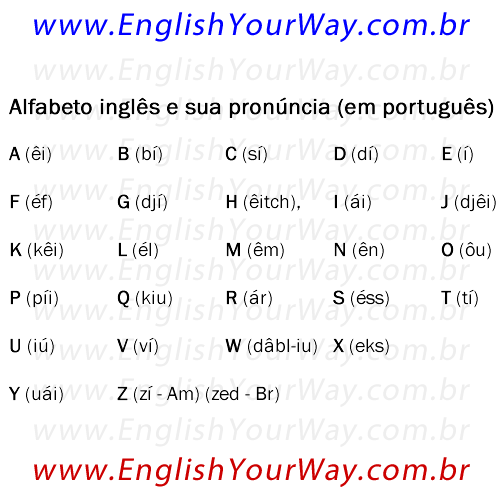
The Alphabet – Phonetically

Today, we’re going to learn how to pronounce each letter phonetically. This will help you read, write, and speak English more confidently. Let’s start by going through the alphabet together. For example, the letter ‘A’ is pronounced ‘ei,’ ‘B’ is pronounced ‘bi,’ and ‘C’ is pronounced ‘si.’

Alphabet and Numbers

A (ei), B (bi), C (si), D (di),

E (i), F (ef), G (dji), 

H (heitch), I (ai), J (djei), K (kei), 

L (el), M (em), N (en), O (ou), P (pi), 

Q (kiu), R (ar), S (ess), 

T (ti), U (iu), V (vi),  W (doubl-iu), X (eks), Y (uai), Z (zi)

By learning the phonetic pronunciation of each letter, you’ll be able to spell out words clearly and understand spoken English better. Practice this a few times until you feel comfortable with each sound. Remember, practice makes perfect, so keep practicing these sounds to master them!

In spite of vs. Despite

“In spite of” and “despite” are very similar in meaning and usage, and both are used to show contrast or opposition to what is expected.

Basic Meaning

Both “in spite of” and “despite” mean that something happens even though there is something that might prevent it. They are used to express a contrast between two ideas.

Structure

  1. Despite
    • “Despite” is always followed directly by a noun, pronoun, or gerund (the -ing form of a verb).
    • Example:
      • Despite the rain, we went for a walk.
      • Despite her illness, she completed the marathon.
      • Despite studying hard, he didn’t pass the exam.
  2. In Spite Of
    • “In spite of” is also followed by a noun, pronoun, or gerund, but it is a phrase with three words.
    • Example:
      • In spite of the rain, we went for a walk.
      • In spite of her illness, she completed the marathon.
      • In spite of studying hard, he didn’t pass the exam.

Key Points to Remember

  • Length: “Despite” is shorter (one word) compared to “in spite of” (three words).
  • Formality: Both can be used in formal and informal contexts, but “despite” may sound slightly more formal or concise in some cases.
  • No ‘of’ after Despite: Never use “of” after “despite.” It’s always just “despite.”
    • Correct: Despite the cold weather.
    • Incorrect: Despite of the cold weather.
  • Same meaning: Both expressions convey the same meaning and are interchangeable in most contexts.

Examples with Explanations

  1. Despite
    • Despite the heavy traffic, we arrived on time.
      • (We arrived on time even though there was heavy traffic.)
    • Despite being tired, she finished her homework.
      • (She finished her homework even though she was tired.)
  2. In Spite Of
    • In spite of the heavy traffic, we arrived on time.
      • (We arrived on time even though there was heavy traffic.)
    • In spite of being tired, she finished her homework.
      • (She finished her homework even though she was tired.)

Visual Aid

ExpressionExampleStructure
DespiteDespite the rain, we went outside.Despite + noun/gerund
In Spite OfIn spite of the rain, we went out.In spite of + noun/gerund