Your Guide to Building Better Sentences When you’re learning English, you might hear a lot about clauses. But what exactly are they, and why are they important? This guide will break down the basics of …
Figures of speech are words or expressions used in a non-literal, creative way to make language more vivid and expressive.Writers and speakers use them to create imagery, add emotion, and make ideas easier to remember. …
QUIT “Quit” is a verb that means to stop or cease doing something. When someone quits an activity, job, or habit, they discontinue or give up that particular action or commitment. “Quit” can also imply …
Countable and uncountable nouns are two categories used to classify nouns based on whether they can be counted or not. Countable Nouns:Countable nouns refer to objects or entities that can be counted as discrete units.They …
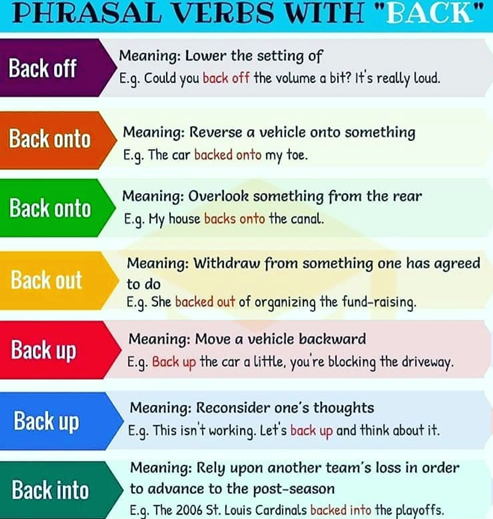
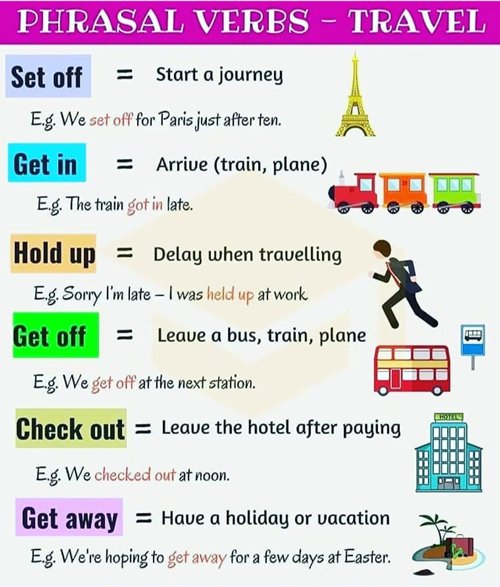
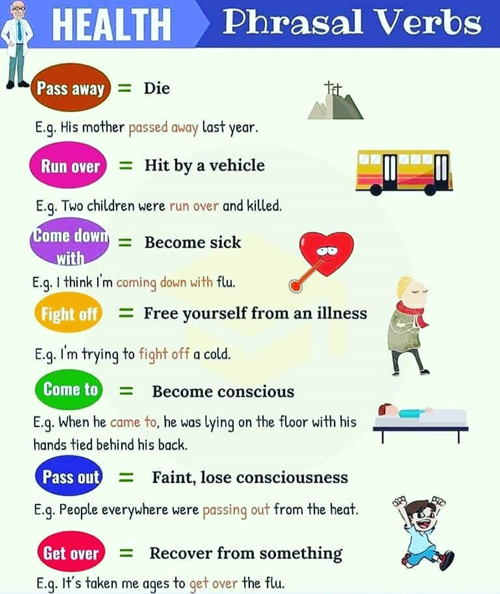
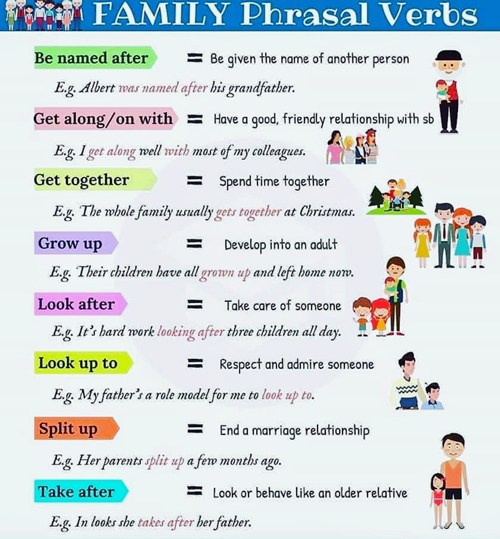
A phrasal verb is a combination of a verb and an adverb or preposition, for example ‘look up’ or ‘look after’, which together have a particular meaning which is different from the verb alone.
If you have any questions or doubts, please ask in the comments or send me a private message.
A phrasal verb is a combination of a verb and an adverb or preposition, for example ‘look up’ or ‘look after’, which together have a particular meaning which is different from the verb alone.
If you have any questions or doubts, please ask in the comments or send me a private message.
A phrasal verb is a combination of a verb and an adverb or preposition, for example ‘look up’ or ‘look after’, which together have a particular meaning which is different from the verb alone.
If you have any questions or doubts, please ask in the comments or send me a private message.
A phrasal verb is a combination of a verb and an adverb or preposition, for example ‘look up’ or ‘look after’, which together have a particular meaning which is different from the verb alone.
If you have any questions or doubts, please ask in the comments or send me a private message.
Idioms are expressions whose meanings are different from the individual words and therefore aren’t meant to be taken literally. They exist in most languages and are usually the result of usage over a long period of time.
If you have any questions or doubts, please ask in the comments or send me a private message.
Idioms are expressions whose meanings are different from the individual words and therefore aren’t meant to be taken literally. They exist in most languages and are usually the result of usage over a long period of time.
If you have any questions or doubts, please ask in the comments or send me a private message.
Idioms are expressions whose meanings are different from the individual words and therefore aren’t meant to be taken literally. They exist in most languages and are usually the result of usage over a long period of time.
The idiom “cut to the chase” means to get to the point without wasting time on unnecessary details. It encourages someone to skip the preliminaries and focus on the most important or relevant part of the discussion or story.
Origin
The phrase originates from the early days of filmmaking, particularly in silent films. In these films, chase scenes were often the most exciting parts and what audiences eagerly anticipated. Sometimes, filmmakers would include too much boring dialogue or slow buildup before the action. “Cut to the chase” became a directive to skip the dull parts and go straight to the exciting chase scene.
Usage
In Conversation: “We don’t have much time, so let’s cut to the chase. What exactly do you need from us?”
In Writing: “After a lengthy introduction, the report finally cut to the chase and presented the key findings.”
Examples:
At Work: “We’ve been discussing this for an hour. Can we cut to the chase and decide on a plan of action?”
In Daily Life: “I don’t have time for the full story. Just cut to the chase and tell me what happened.”
Summary
“Cut to the chase” is a useful idiom when you want to emphasize the need for brevity and directness in communication.
If you have any questions or doubts, please ask in the comments or send me a private message.
Idioms are expressions whose meanings are different from the individual words and therefore aren’t meant to be taken literally. They exist in most languages and are usually the result of usage over a long period of time.
Here’s an explanation of the idiom “keep in touch” along with the requested focus keyphrase, slug, and meta description.
Explanation of “Keep in Touch”
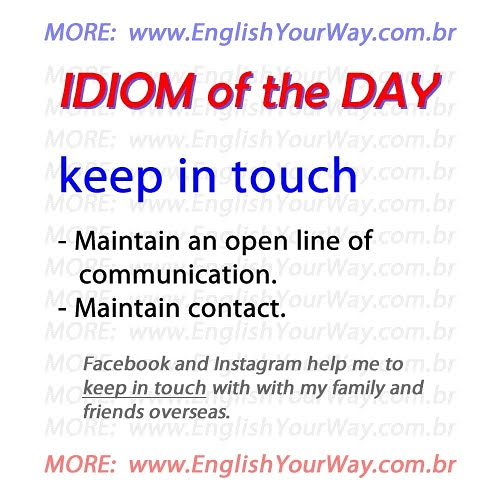
The idiom “keep in touch” means to maintain communication with someone. It is often used when people are parting ways and want to express the desire to continue their relationship or communication in the future.
Usage:
In Conversation: “It was great seeing you again. Let’s keep in touch!”
In Writing: “Feel free to email me any time. I want to keep in touch.”
Examples:
Between Friends: “Even though we’re moving to different cities, let’s make sure we keep in touch.”
In Business: “Thank you for attending the meeting. We hope to keep in touch regarding future opportunities.”
Summary:
“Keep in touch” is a friendly and common way to suggest ongoing communication and connection, often used when people anticipate being apart.
If you have any questions or doubts, please ask in the comments or send me a private message.
Idioms are expressions whose meanings are different from the individual words and therefore aren’t meant to be taken literally. They exist in most languages and are usually the result of usage over a long period of time.
If you have any questions or doubts, please ask in the comments or send me a private message.
Idioms are expressions whose meanings are different from the individual words and therefore aren’t meant to be taken literally. They exist in most languages and are usually the result of usage over a long period of time.
If you have any questions or doubts, please ask in the comments or send me a private message.